Tuesday, November 18, 2008

The Final Structure to Vogler's Creation...

Summary

"The Writer's Journey" relates the enormous connection between the Hero's Journey and the journey of the writer. Vogler explains how much alike the path of the Hero’s Journey connects with the journey of the writer and the strength the two combine to make. Each step we reached in the Hero’s Journey showed us a connection to the Writer’s Journey. These steps showed us the tools needed for creating a great story. Vogler then goes on to explain the great amount of meaning and reality with symbolic writing of other cultures. Vogler goes on to say “I have always suspected that stories are alive” (300). It is said that all stories are meant to “teach you a lesson disguised as entertainment” (300). Then Vogler goes on to discuss the story of Rumpelstiltskin and its affects. Followed by touching base on wishing and connecting to the audience.

Reaction

It was very interesting to me when Vogler made the connection between The Writer’s Journey and the Hero’s Journey. A good supportive fact of the Hero’s Journey is its connection to real life. I enjoyed Vogler connecting everything to real life and then make the full 360 back to “breaking the mold”. You have the tools, now you just need to use them.

Questions:

1.) Do you think that stories really "Come to Life"?

2.) If so, how do stories come alive to you?

3.) How does The Journey relate to how you live?

Vogler, Christopher. “The Writer’s Journey: Mythic Structure for Writers." Studio City, CA: Michael Wiese Productions, 1998 p. 293-312.

Tuesday, November 11, 2008

Annotation #10

GET OUT OF JAIL FREE CARD

Thursday, November 6, 2008

4 modes

BE GREEN!!!

This is my Song:


It's Not Easy Being Green!


This is my Movie:


Charles Manson Talks About The Enviornment

My Image: I don't wanna lose places like this!!!


My Book: I like to build things!!!

Wednesday, November 5, 2008

Halloween!!!


If you can't guess I'm a HICK!!! Related to our favorite grandma killer story.

Tuesday, November 4, 2008

Annotation #9

Get out of jail FREE card!!!

Thursday, October 23, 2008

Feedback on Paper

From Class:
STRENGTHS
1.) Good use of Eckerd''s green ideas, follow this a little deeper.
2.) "Nice logical order of aspects"
3.) The subject is really strong and has a lot of logos.

WEAKNESSES
1.) Select specific schools to focus on so the paper isn't to broad.
2.) Be More specific
3.) The observations and support gets more narrow throughout the paper

A Special World

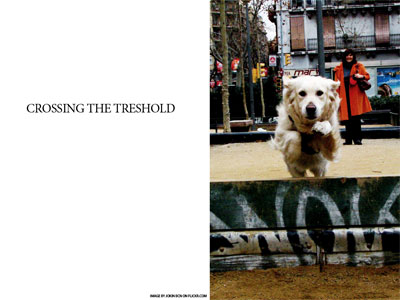
Crossing the Threshold


Vogler Annotation: Pgs. 127-141

Summary:
In this chapter we reached crossing of the first threshold. This is the point in the hero’s journey where he must fully commit to the adventure ahead. This is “the most critical action of Act One”(127), “The call has been heard, doubts and fears have been expressed and allayed, and all due preparations have been made.”(127) To reach this commitment point there are generally outside causes, they could be related to the hero himself or the mentor may be the cause. Whatever it may be it must push the hero to the point of no return. Once the hero reaches this threshold he will generally find some sort of obstacle, this could be a friend or enemy, or some predicament in his way. These people or things are called threshold guardians. The hero must pass these obstacles to reach the next part of the adventure in the Special World.
In the Special World the hero will be tested not only by enemies but possibly by allies as well. Once in the Special World you should see differences from the ordinary world. Throughout the adventure the hero may get support from a mentor or ally but at the same time this could become an obstacle. The Special World is generally related or even controlled by an enemy or enemies. These enemies may come in many forms from antagonists to simple rivals. The enemy could even be closer then you aspect.

Reaction:
I found this section of the book very interesting. I especially liked Stage Six with the tests, allies and enemies. The examples from The Wizard of Oz related to allies was very easy to relate to and understand. I thought it was interesting when he brought up the “local watering holes”.(139) I felt he went a little overboard with the wizard of Oz but I saw what he was trying to say. I look forward to what the next section holds.

Questions:
1.) Have you ever found a time where you felt that you needed a mentors or allies for a “Special World” of your own?
2.) What is the most critical action of Act One?
3.) What is the first step when crossing the threshold?

Vogler, Christopher. “The Writer’s Journey: Mythic Structure for Writers." Studio City, CA: Michael Wiese Productions, 1998 p. 127-141.

Monday, October 6, 2008


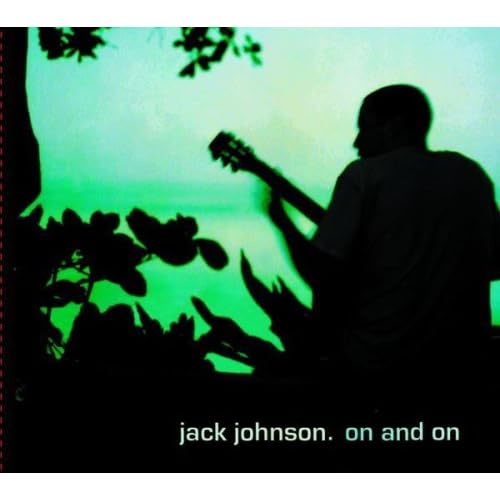
Pathos: Jack Johnson - Times Like These


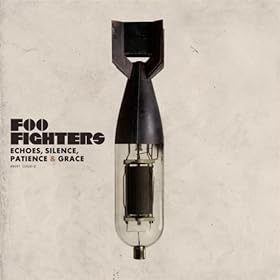
Ethos: Foo Fighters - But, Honestly


Logos: Red Hot Chili Peppers - Under The Bridge

Thursday, October 2, 2008

What to change, What to Change.....

So after discussing my paper with some of my peers I have decided the areas I need to focus on before next revision are as follows: Clean up the opening and link it to the conclusion, Expand on the road trip portion of my journey with more detail, and last but not least Give the conclusion a little more bang! Overall I want to get the reader more involved in the journey so they can see what a great adventure it has become. As to what to edit is intertwined with the revisions. In my 3rd paragraph I was told the sentences don't mesh as well as they could, I am going to focus on this issue and smooth it out. Then I will go on the 4th paragraph and attempt to remove the confusion in the discussion I had with my father, possible change the descriptions given. Then to finish it up by fixing the tense issues in the 6th paragraph.

Tuesday, September 30, 2008

Vogler Annotation: Pgs. 83-105

Summary
In these chapters Vogler looks into the Ordinary World. He goes through a guide for the journey step by step. Starting with Before the Beginning and ending with Questioning the Journey. Before the beginning sets a tone for the ordinary world. It gives some background and sets a base to grab the reader. From here he jumps to the “title” which gives a clue or link to what the story holds ahead. Following the title is where “the opening image can be a powerful tool to create mood and suggest where the story will go” (p.85). Next is the prologue where the author can give that special link to a back-story or “cue the audience to what kind of movie or story this is going to be” (p.86). As you learn what type of story is about to unfold the ordinary world must be shown to emphasize the special world while showing contrast and foreshadowing the story ahead. “Every hero needs both an inner and an outer problem,” which is normally lead by a question (p.88). Once the problem is disclosed the hero makes his or her entrance. Part of the hero experience is connecting the hero to the audience while identifying and connecting his or her strengths and flaws. Showing your flaws shows your history and or back-story while expressing what you have at stake. This is where the ordinary world brings the theme back into the story and shows the call to adventure. Temptation to need, the options are lost and the call to adventure is made.

Reaction
These chapters dig deep into the ordinary world while expressing the call to adventure while supporting the general theme. I liked when the stories theme supports the inner and outer problems creating an ordinary and an extraordinary world. I felt that an important element of these chapters is the connection to the call to adventure. Just because the story may have all these factors, the level of call to adventure may be a lot higher then the level of conflict.

Questions:

1.) Does the inner problem have to relate to the outer problem?
2.) Is the hero required to have a back-story?
3.) What is the most important part of a great hero?

Vogler, Christopher . The Writer's Journey : Mythic Structure for Writers. Studio City, CA: Michael Wiese Productions, 2007.

Tuesday, September 23, 2008

Threshold Guardian

Along the road of a great journey all hero's will come upon obstacles. This chapter describes the duty, appearance, and connection of a threshold guardian. According to Vogler, threshold guardian's are generally not the main villain in a story, however they are normally linked to the main villain in some way. The start of the chapter describes what to look for in a threshold guardian; the middle describes what form the guardian might be or do. Last the chapter goes into the details of how to read and conqour your guardian.

Vogler, Christopher. The Writer's Journey. Studio City: Michael Wiese Productions, 2007.

Tuesday, September 9, 2008

Summary of a Practical Guide


In the first chapter of "The Writer's Journey: A Practical Guide,” breaks down the "Hero's Journey." The author explains that the first step to a good story is to show the character in its original environment, a familiar place or area to the character which could possibly be known as home. The second step to a good story is "The Call To Adventure". This is where the problem/adventure is shown. Following this is the third step of the story known as the "Refusal Of The Call (The Reluctant Hero)" comes into play. This is when the hero does not want to step up top the challenge before them. This connects the character more to the audience.

Following the refusal, support comes a friend or mentor. This person helps the hero makes the decision to go forward with whatever decision is holding the hero back from taking action. This plays into the first threshold of the story. This is where the hero accepts the challenge or is shown the first stage of the adventure or journey. Once the hero crosses this threshold they will be tested and challenged, during this process they will either makes allies or make enemies that will support or attack them for he next act of the story. Following this is the buildup or setup to the main event. This is the stepping-stone for the main ordeal. Which leads to the main climax and challenge for the hero of the story.

Once the hero gets past this ordeal the hero generally receives a reward and begins there journey home. Along this journey they may have additional micro climax's that will support the story and add adventure. An example of this would be the final drag race in "Fast & the Furious". Here the story takes a turn towards the final threshold, this may be a stepping-stone on their journey home or a pause for compassion in a romantic comedy. Whatever it may be, it sets the tone for the conclusion, the point where the antidote is returned or the virus is cured. This is the closing point for all the future buildups or ties up in the storyline. That completes the 12 basic steps to great story-telling.

Wednesday, September 3, 2008

Character Like Me!

James P. Sullivan

So after some long thought and a good movie night, I have decided the character I am the most like is James P. Sullivan, aka "Sulley", from Monsters Inc. Now I'm not calling myself a monster in a way shape or form! I am calling myself a softhearted friend that loves to know everyone around him. Yes I am Tall and have big feet, however there is nothing wrong with that.
The first thing I see in common with Sulley besides his size, is his attitude towards life. In the movie Sulley says “hi” to people all over the place, and according to my friends, I do the exact same thing. In general Sulley is an all around nice guy/monster that works hard for what he wants and cares deeply about his friends and family. I have always held strong values, and will do anything I can to support my friends and family. As in the movie they make it a point that Sulley is a true supporter of his friends and of what he feels is the right think to do. I have been told I am the same way, which means a lot to me. So next time you see a really well done character that relates to you, think about why and how you could be like Sulley.

Monday, September 1, 2008